
Works
commercial facilities
Title
cotton alley community( Izumo)
2005
Comment
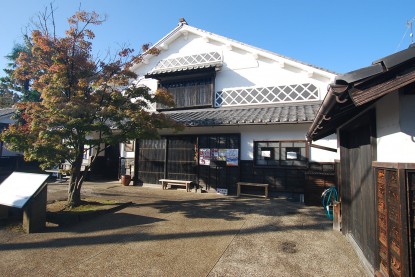
The renovated house was scheduled for demolition due to its age, but in the Edo period it was a “Gomen-yashiki” (a residence where residents were given a tax exemption) where the local people paid taxes in gratitude to the doctor, and as a token of their gratitude, it was spared demolition.
It was completely demolished and various administrative rooms were added to the south, while the Japanese-style adjacent room on the first floor (guest room) and the second floor (exhibition room) were preserved as they were originally and turned into a soba restaurant. The adjacent rooms each had a formal design with a tokoto and nageshi (rail-like wall), and the floor beams were large, making it suitable for expansion and renovation. The transom on the veranda was still a shoji screen, so one of them was used as a smoke exhaust window (lol). The shoe-removal stone on the veranda was dug up from a kimachi-stone that supported the foundation stone of the main pillar, and was carefully finished even to the point where it was hidden in the soil. Perhaps it was the spirit of the craftsman.
The design of the namako wall, the corbel-shaped plaster on the ridgepole, the parent-child lattice, etc. were copied from the details of the surrounding houses. The meeting hall was built in the style of a storehouse and was positioned facing the Gomen Yashiki across the courtyard.